











Data Engineering Services
As a data engineering company, we design and deliver modern data platforms — spanning lakehouse architectures, real-time streaming pipelines, governed data contracts, and AI-ready feature layers — built to operate at enterprise scale and integrate across your existing cloud and on-premise ecosystem.

The Impact We Promise Through Data Engineering Services

With Ease


Strategic Decisions


We help you build a strong data foundation with a well-defined strategy and scalable architecture. Our solutions ensure seamless data flow, enabling AI-driven insights and future-ready analytics.
- Data Strategy & Roadmap Development
- Data Governance & Compliance Strategy
- Enterprise Data Architecture Design
- Data Engineering & Pipeline Development

DataOps services bring agility, automation, & control to your data lifecycle. By applying DevOps principles to data workflows, we help teams move faster, collaborate better, and deliver high-quality, trusted data at scale.
- Data Pipeline Automation
- Data Quality & Observability
- Metadata & Lineage Management
- Governance & Compliance Automation

Turn complex data into meaningful insights with our analytics and visualization solutions. We help businesses track performance, identify trends, and drive smarter decision-making.
- Business Intelligence & Reporting
- Advanced Data Analytics
- Custom Data Visualization Solutions
- GenAI-Powered Insights

We ensure your data remains secure, compliant, and high-quality. Our governance frameworks help maintain transparency while protecting against threats and unauthorized access.
- Advanced Data Classification & Taxonomy
- Data Lineage Visualization & Analysis
- Dynamic Data Security & Access Control
- Adaptive Data Governance Frameworks
Our Data Engineering Services Suite
Azilen’s DataOps Approach for Controlled and Scalable Data Workflows
Data Engineering Success Stories Delivered by Azilen

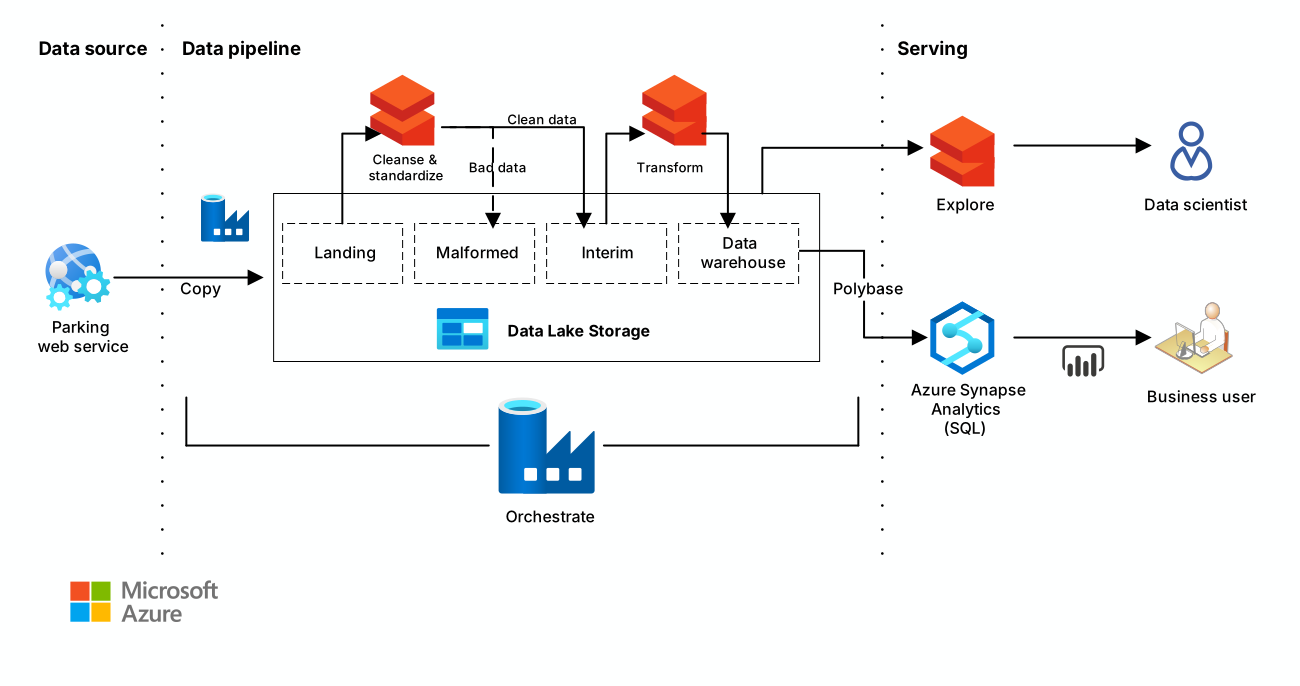
When an InsurTech platform begins processing over a million premium transactions each month, visibility becomes mission-critical. This case study explores how we architected an Azure-based multi-tier data warehouse that brought unified cashflow transparency, automated orchestration intelligence, and a compliance-ready data foundation to a high-volume insurance ecosystem.

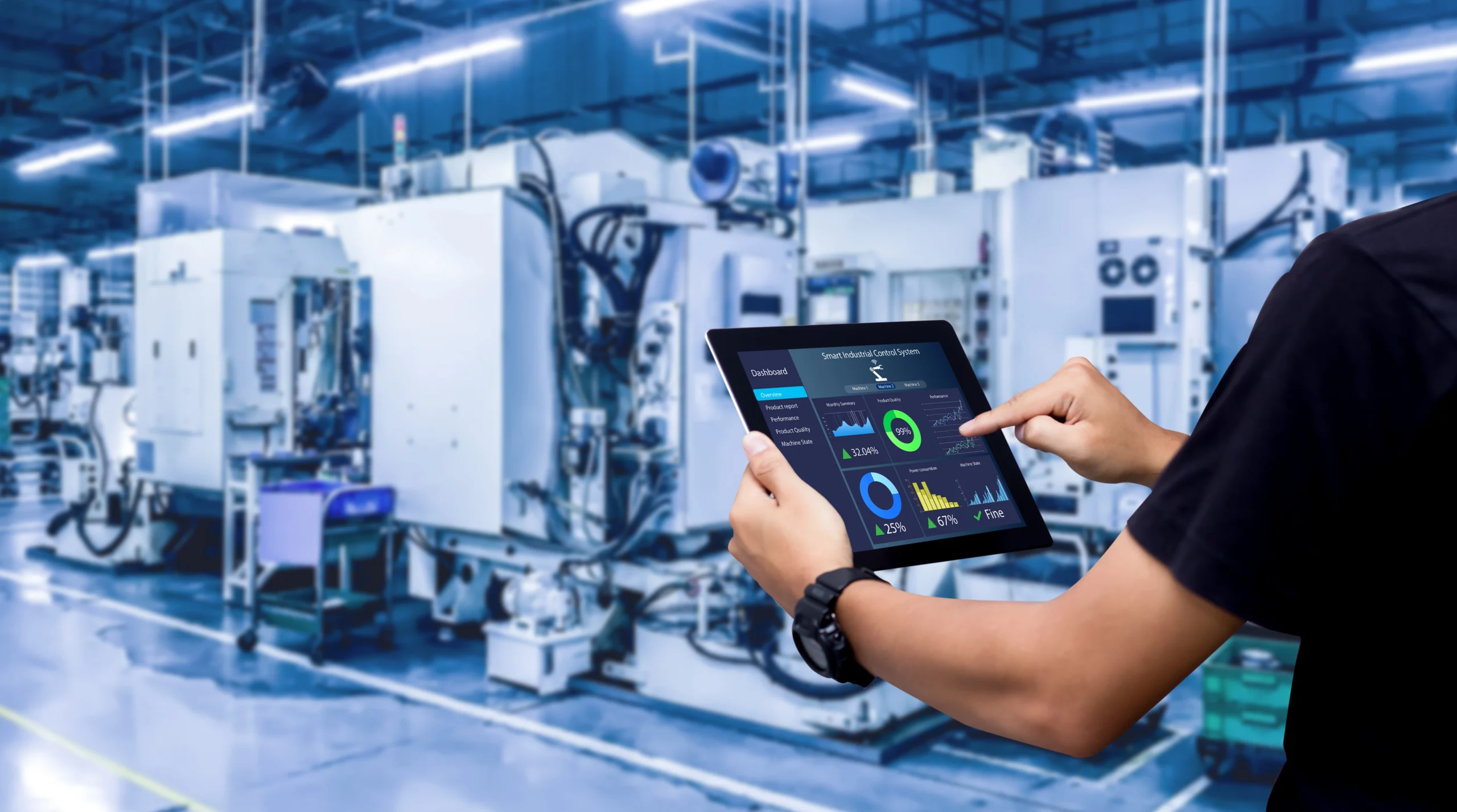
When high-precision manufacturing machines generate 70+ GB of telemetry per machine per year across 100+ machines, protocol complexity quickly becomes a growth bottleneck. This case study shows how a multi-protocol IIoT gateway ecosystem, deployed across 80+ industrial hardware gateways, unified machine data into real-time analytics and predictive maintenance insights.
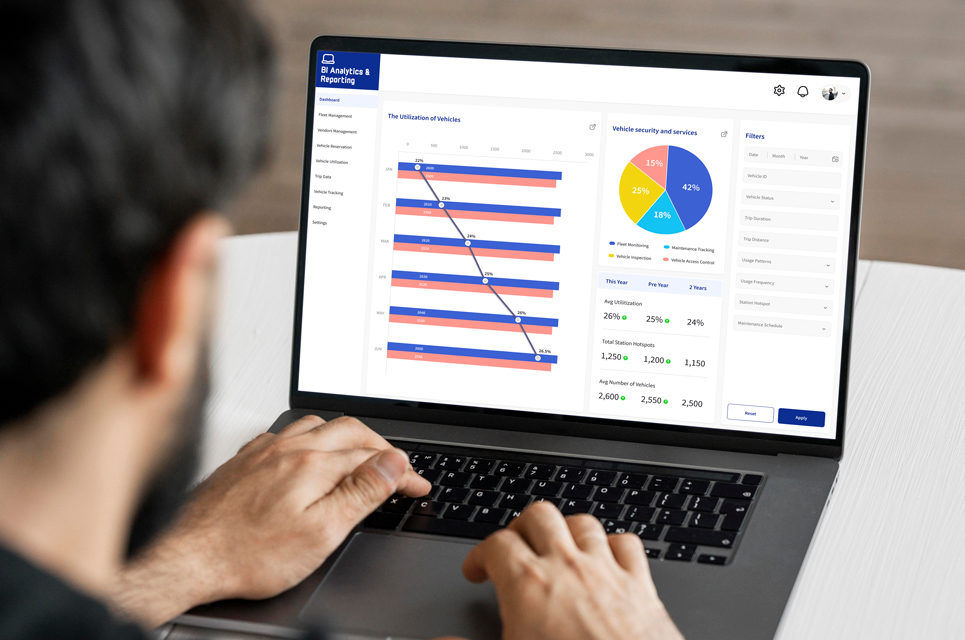
According to a report from Forrester in 2023, majority of organizations will adopt a centralized data warehouse by 2025, to gain better insights into business operations.
Data Challenges Slowing You Down? Let’s Build a Scalable Solution. Get Your Tailored Cost and Time Estimate Now!

Ensuring Data Excellence
With Our Comprehensive Checklist
 Real-Time & Batch Data Ingestion
- Scalable Data Storage
- Distributed Data Processing
- Containerization
- AI/ML-Optimized Data Pipelines
- End-to-End Data Governance
- BI Dashboard Integration
- Serverless & Auto-Scaling Architecture
- Intelligent Monitoring & Observability
- Metadata Management
Ready to Turn Raw Data Into a
Reliable, Revenue-Driving Asset?
From data architecture and pipeline engineering to cloud warehousing and real-time streaming — we help US businesses build the data infrastructure that powers faster decisions, smarter products, and scalable growth. Not duct-taped pipelines. Production-grade data systems engineered around your operations.
Technologies Powering Our Data Engineering Services
From data ingestion and pipeline orchestration to cloud warehousing, streaming infrastructure, and DataOps — the complete technology stack behind our Data Engineering services.
Apache Airflow
Pipeline Orchestration
Prefect
Workflow Automation
Dagster
Data Orchestration
dbt
Data Transformation
Fivetran
Managed ELT
Airbyte
Data Integration
Stitch
ETL Platform
Apache NiFi
Data Flow Automation
Apache Spark
Distributed Processing
Apache Kafka
Event Streaming
Apache Flink
Stream Processing
Databricks
Unified Analytics
Apache Beam
Unified Batch/Stream
Kafka Streams
Stream Processing
AWS Kinesis
Real-Time Streaming
Google Pub/Sub
Messaging Service
Snowflake
Cloud Data Warehouse
BigQuery
Serverless Analytics
Amazon Redshift
Cloud Data Warehouse
Azure Synapse
Analytics Platform
Delta Lake
Lakehouse Storage
Apache Iceberg
Table Format
Apache Hudi
Incremental Processing
Databricks Lakehouse
Unified Platform
PostgreSQL
Relational Database
MySQL
Relational Database
MongoDB
NoSQL Database
Cassandra
Distributed NoSQL
Redis
In-Memory Cache
Elasticsearch
Search & Analytics
Amazon S3
Object Storage
Azure Data Lake
Cloud Storage
AWS
Cloud Platform
Google Cloud
Cloud Platform
Microsoft Azure
Cloud Platform
Terraform
Infrastructure as Code
Docker
Containerization
Kubernetes
Container Orchestration
AWS Glue
Serverless ETL
Azure Data Factory
Data Integration
Great Expectations
Data Validation
Monte Carlo
Data Observability
Apache Atlas
Data Governance
Collibra
Data Catalog
dbt Tests
Pipeline Testing
OpenMetadata
Metadata Management
Grafana
Pipeline Monitoring
DataHub
Data Discovery
How Azilen Builds Data Platforms for High-Impact Use Cases

We start by mapping business use cases to data requirements — identifying sources, data flows, and consumption layers. This ensures the platform is built with clear purpose, ownership, and alignment to analytics and AI goals.

We engineer data pipelines for ingestion, transformation, and delivery across batch and real-time workloads. The focus is on stability, fault tolerance, and consistent data availability across systems.

We implement data contracts, validation layers, and observability frameworks to ensure data accuracy, consistency, and traceability across pipelines. This includes schema enforcement, anomaly detection, and lineage tracking.

We structure data for downstream consumption — supporting BI tools, operational systems, and machine learning pipelines. This ensures data is accessible, usable, and aligned with business decision-making needs.
Building Agentic AI-Ready Data Foundations
Azilen designs data foundations that support autonomous decision-making by ensuring data is available in real time, remains consistent across pipelines, and is structured for both inference and learning workflows.
Post-Delivery Support for Data Engineering and Pipeline Operations
Once your data engineering infrastructure is in place, Azilen's support team covers the operational scenarios that matter most to platform owners and data leaders:.
- Support for scaling data infrastructure/pipelines as data volumes grow.
- Assistance with integrating new data sources into existing pipelines.
- Strategies and support for data recovery and system restoration.
- Configurable alerts for monitoring pipeline health, data anomalies.

Talk to Our Data Engineering Experts — Review Your Data Infrastructure Requirements in 30 Min
Dealing with broken pipelines, siloed data, or a warehouse that can't keep up with your business? Our data engineers will help you design the right architecture, choose the right stack, and build a data foundation that's reliable, scalable, and built for the long haul.
No commitment · No cost · Just a conversation

The Spirit Behind Engineering Excellence


What Our Clients Say About Their Journey with Us

Working with the Azilen’s team on our project was a great experience. The team provided timely support, and delivered high-quality results.

Azilen has been working with us for about two and a half years now, and we’ve done multiple projects together. They’ve been fantastic, especially in the HR space. Whether it’s integrations or custom software development – these guys are our go-to team. Seriously, they’re one of our favorite partners. Highly recommended.

The Azilen team helped develop a complex cross-platform mobile application. We were more than happy with the professional project management and transparent communication. Scoping and implementation were as easy as working with local staff. The results delivered were always on time and of high quality. We look forward to working with Azilen on our next project.

We appreciate our relationship with Azilen. We are just getting going, ClearingBid is going to democratize the IPO market for all, this is where Azilen has helped and played an important role with us. For a big vision, we did not have a design team to start, so number of our solutions were driven by Azilen. I want to give a big shout out the structured product management skills and the necessary follow up efforts from the team.

We are extremely satisfied with the competence technical expertise that Azilen has shown us, this is combined with great customer service.

The beta product has shown reliable performance and satisfactory features, according to test users. Despite some scheduling misalignment, Azilen Technologies’ flexibility, responsiveness, and complete deliverables continue to boost the collaboration.

Azilen Technologies delivered an impressive product and continues to create extensive project overviews that ensure effective collaboration. The team communicates clearly and manages the project cost-effectively. They are accessible and offer technical expertise to support a valuable partnership.
The quality of the final deliverables impressed the end client, a testament to the team’s agility and ability to collaborate with a remote partner. They actively put in the effort to adapting their work to reflect given feedback. Their contributions and suggestions added value to the relationship.
As co-founders of a New York based legal technology startup – we’ve worked with Azilen Technologies since January 2017. Azilen has been a steadfast resource for our company, helping us to translate product ideas into live applications for Web, IOS and Android. We are highly satisfied with Azilen’s overall ability to implement technical solutions. The team is highly professional; they utilize good collaboration tools; they provide regular feedback and advice, and they help allocate project resources efficiently. Overall, the experience has been excellent.
Prototype versions of both apps have shown improvement over past versions and received largely positive feedback. Azilen Technologies provided pragmatic recommendations and advice about long-term strategies. Their dependable delivery and impressive technical skills produced excellent results.
Very satisfied with high quality of work and ability to collaborate on and accomplish complex objectives. Across all areas of mobile app development and deployment to detailed custom applications, our extended team here is reliable and delivers successful results.
All clients have responded positively to the new sites, which are polished and highly dependable. Azilen Technologies communicates effectively, handles complex projects with ease, and delivers consistently high-quality work within budget and schedule.
Frequently Asked Questions (FAQ's)
Data engineering is the discipline of building the systems that collect, store, transform, and move data reliably — pipelines, warehouses, lakes, orchestration, and governance infrastructure. Data science applies statistical and ML methods to analyze that data and produce predictions or insights. Data engineering builds the infrastructure data scientists and analysts work on top of. Without sound data engineering, data science outputs are unreliable or impossible to reproduce at scale.
A production-grade data pipeline typically includes: ingestion (real-time streaming via Kafka or Kinesis, or batch via managed connectors), raw storage in a cloud object store (S3, GCS, ADLS), transformation via dbt or Spark with quality checks enforced at each step, orchestration via Airflow or Dagster, and serving layers for BI tools or ML feature consumption. Most enterprise implementations also include a data catalog, lineage tracking, and schema registry to support governance and discoverability.
ETL (Extract, Transform, Load) processes data before it enters the target store — appropriate when strict data quality gates are required before any data lands in production. ELT (Extract, Load, Transform) loads raw data first and transforms it inside the cloud warehouse or lakehouse using the platform’s compute engine. ELT is generally preferred for modern cloud deployments because it separates storage from compute cost, enables schema-on-read flexibility, and allows re-transformation as business logic evolves. Most enterprise platforms use a hybrid: strict ETL for sensitive domains, ELT for analytical and exploratory workloads.
Schema evolution is managed through a combination of schema registries (Apache Avro, Protobuf), table formats that support schema versioning natively (Delta Lake, Apache Iceberg), and explicit data contract definitions between producing and consuming teams. When a producer changes a schema, the contract governs compatibility rules — additive changes are allowed, breaking changes require versioned migration paths. This prevents the silent downstream failures that characterize unmanaged schema changes in legacy pipelines.
Real-time processing uses a streaming architecture — Kafka for event transport, Flink or Spark Structured Streaming for stateful computation — to process data continuously rather than in scheduled batches. It is necessary when the business decision depends on data that is minutes or seconds old: fraud detection, live inventory availability, IoT alerting, real-time recommendation engines. For use cases where hourly or daily data is sufficient, batch or micro-batch processing is less complex and less expensive to operate.
AI models require structured, consistently encoded, well-documented data. Data engineering for AI covers: feature engineering pipelines that compute and store reusable ML features in a feature store (Feast, Vertex AI Feature Store), vector embedding pipelines that populate vector databases (Pinecone, Weaviate, pgvector) for retrieval-augmented applications, data versioning for model reproducibility, and monitoring pipelines that detect data distribution drift before it degrades model performance. AI teams that build on a well-engineered data platform spend significantly less time on data preparation and more on model development.
Data observability refers to the ability to understand the internal state of your data platform from its outputs — without instrumenting every individual pipeline manually. It covers five dimensions: freshness (is data arriving on schedule?), volume (are record counts within expected ranges?), schema (have structure changes broken downstream consumers?), distribution (has the statistical profile of key columns shifted?), and lineage (can you trace where a specific record came from?). Tools like Monte Carlo, Soda, or custom dbt tests implement these checks. Azilen builds observability layers as a first-class component of every data platform delivery.
Migration follows a structured sequence: inventory of existing sources, transformations, and downstream consumers; selection of target platform (Snowflake, BigQuery, Databricks, or Redshift depending on workload profile and cloud provider); pipeline re-architecture using modern orchestration and transformation tools; parallel running to validate output parity; and cutover with rollback capability. Governance and access control are re-implemented in the target platform — not simply migrated from the legacy system’s constraints. A phased approach reduces risk by migrating high-value, lower-complexity domains first.
Cloud data platform costs have three major levers: compute (query execution and pipeline processing), storage (raw data volume and retention period), and egress (data movement between systems or regions). Cost-aware architecture decisions — partition pruning, query result caching, separation of hot and cold storage tiers, auto-scaling compute clusters, and choosing ELT over always-on ETL compute — can reduce operating costs by 30-60% compared to naive cloud deployments. We include cost modeling as part of every architecture engagement and revisit it as part of ongoing support.
Yes. Hybrid and multi-cloud architectures are common in enterprises with existing on-premise infrastructure, regional data residency requirements, or multi-vendor cloud strategies. Containerization via Docker and orchestration via Kubernetes allow pipelines to run consistently across environments. MLOps tooling (MLflow, Kubeflow, Vertex AI Pipelines) integrates with the data engineering layer through defined interfaces — data pipelines produce to a shared feature store or artifact registry, and ML workflows consume from it regardless of which environment the compute runs in.
A data lake stores raw data in its native format — structured, semi-structured, and unstructured — in cheap object storage, without enforcing a schema at write time. A data warehouse stores structured, transformed data optimized for analytical queries, with enforced schemas and high-performance query engines. A lakehouse architecture combines both: it stores data in open table formats (Delta Lake, Apache Iceberg, Apache Hudi) on object storage, but adds ACID transactions, schema enforcement, and query optimization. Lakehouses eliminate the costly and latency-adding data copy step between lake and warehouse, making them the default architecture for new enterprise data platform builds in 2026.


 Talk to Our
Consultants
Talk to Our
Consultants Chat with
Our Experts
Chat with
Our Experts Write us
an Email
Write us
an Email